Product news
Winter tire makers innovate for less road wear backed by stricter regulations
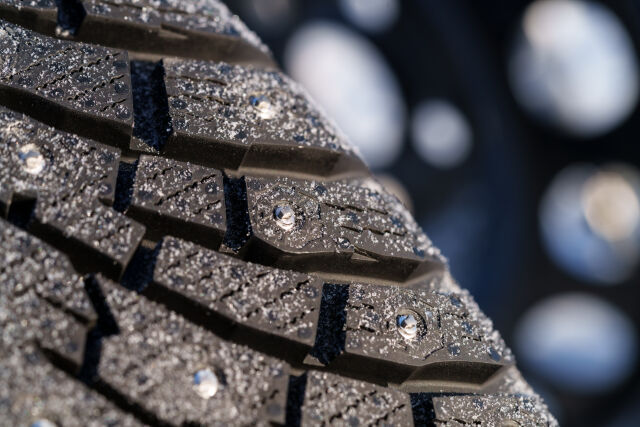
Many countries are introducing stricter road wear limits for studded winter tires. The new regulations accelerate the development of studded tires with reduced road wear while maintaining ice grip required in harsh winter conditions.
In Finland, the Finnish Transport and Communications Agency Traficom’s A+ type-approval requirements begin to apply to studded passenger-car tires (Class C1) manufactured on or after 1 January 2027. Traficom has estimated at a general level that tires complying with the new regulation will reduce road wear by approximately 15%.
The Finnish approval requirements already serve as a reference in other countries in the Nordics region, and similar requirements may follow in other countries. The focus on reducing road wear also extends across North America, where studded tires remain an important winter safety solution in many parts of Canada, Alaska and the northern United States. Studded tire regulations vary significantly across the continent, from the bans and restrictions in certain areas to permission to use provided they meet road wear regulations.
Regulations for studded tires are nothing new. Early restrictions introduced after studded tires emerged in the 1960s focused on the number and size of studs. The change in regulations is pushing manufacturers to combine lower road wear with reliable winter safety.
“Road wear can be reduced by making studs smaller and lighter or limiting their number, but these measures can weaken ice grip, the defining safety feature of studded winter tires,” says Jarmo Sunnari, Global Product Manager at Nokian Tyres.
While some regions continue to restrict or prohibit studded tires based on road wear concerns, modern stud technology has advanced significantly since many of those regulations were first enacted.
“For decades, winter tire development focused almost exclusively on safety and grip. We are now increasingly working to reduce road wear while maintaining ice grip,” Sunnari notes.
Policymakers aim to balance winter safety, infrastructure preservation and environmental considerations. Innovations such as the Nokian Tyres Hakkapeliitta 01 demonstrate how ice grip can be delivered alongside reduced road wear. The tire’s Adaptive Base compound enables the studs to respond to driving conditions: they provide enhanced traction on ice for a safer drive but recede into the tire while driving on bare asphalt, helping to reduce road wear.
“Nokian Tyres Hakkapeliitta 01 provides up to 10 percent better ice grip* than its predecessor Nokian Tyres Hakkapeliitta 10. On bare asphalt, the studs retract into the tire, reducing road wear by up to 30 per cent compared with the predecessor**. As an additional benefit, the tire is also quieter than traditional studded tires***,” Sunnari explains.
Further information:
*Internal comparison testing by Nokian Tyres, White Hell, Finland, week 7/2025. Tested tire size: 205/55R16. Tested comparison product: Nokian Tyres Hakkapeliitta 10. Tests covered: Acceleration on ice, breaking on ice. Test vehicle: Volkswagen Golf. Temperature: -3°C. Results apply to the tested tire size. Actual on-road results may vary.
**Internal comparison testing by Nokian Tyres, Hakka Ring, Spain, week 11/2026. Tested tire size: 205/55R16. Tested comparison product: Nokian Tyres Hakkapeliitta 10. Tested for road wear test using Toyota Corolla as a vehicle. Temperature: +2°C to +13.5°C. Results apply to the tested tire size. Actual on-road results may vary.
***Internal comparison testing by Nokian Tyres, Nokia, Finland, week 18/2025. Tested tire size: 205/55R16. Tested comparison product: Nokian Tyres Hakkapeliitta 10. Interior noise evaluation test conducted with Volkswagen Golf. Weather conditions: No rain, 8°C to 13°C. Results apply to the tested tire size. Actual on-road results may vary.