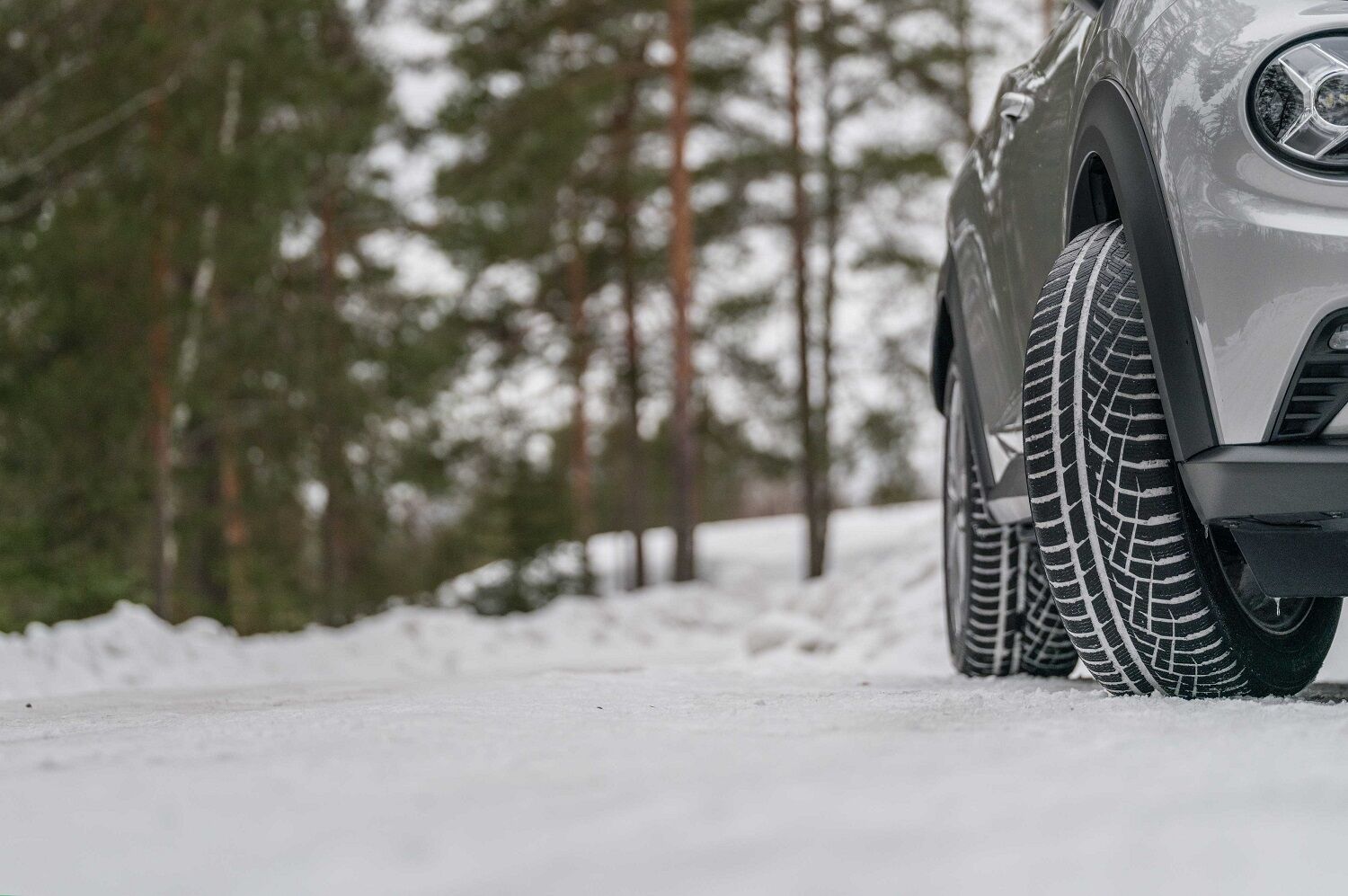
Step inside the tire shop with us to learn how to make your tires work for you.
The impact of tires on safety
All steering, braking and accelerating forces between a vehicle and the road are mediated by the tires. The tires are the most active safety equipment of your car - your car is kept on the road and you in control of your car by four contact areas the size of your palm.
The role of the tires in the safety of a car is especially pronounced under demanding and quickly-changing conditions: on snow or ice, on a wet road or in surprising situations.
Proper tread and tire pressure is vital to the functionality of tires. When tires wear out, the tires' wet grip and hydroplaning properties essentially deteriorate, and the risk of accidents increases. Tires lacking sufficient pressure make controlling the car under extreme situations more difficult and allow for the steering to pull more to the side; insufficient tire pressure may even cause a blow-out.
The demanding conditions of the north require much from tires. The tire must retain its grip on the road even under wretched weather conditions. Road surface friction in the wintertime varies between the fraction coefficient 0.1 for wet ice to the coefficient of almost one for dry roads. In addition to absolute grip, the correct relation between lateral and longitudinal grip ensures good anticipatory properties and steering response even in a blizzard or watery slush.
Safety should trump durability
Most drivers want two major things from their tires: precise performance and a long tread life. Tire manufacturers spend a great deal of time and energy building products that meet both needs.
But when it comes down to it, those two qualities don’t always work well together. The highest-performing tires handle so well because they have a tight grip on the road. How do they get such a firm grip? They have softer compounds that are more sensitive to the pavement. Unfortunately, those soft compounds typically wear down faster.
Meanwhile, tires with massive mileage warranties are so durable because they consist of harder compounds that resist tread wear. The downside? They’re less sensitive to the road and often don’t handle as well, particularly on wet roads.
Here’s our stance: Drivers should prioritize safety over tread life. In our view, tires that handle precisely and get you to your destination safely are more valuable than long-lasting tires that don’t provide the same peace of mind.
Certainly, it’s a nuanced balance. For instance, our intensive research and development efforts have allowed us to craft durable tires that perform expertly. But we will never sacrifice safety for the sake of durability, and we don’t think you should, either.
For more information on maximizing the durability of your tires, click here.
Please remember that it is the driver’s responsibility to ensure their tires are safe and suitable for their vehicle and to follow the vehicle’s manufacturer´s guidelines for proper use and maintenance. Consult your closest Nokian Tyres dealer or your vehicle’s manufacturer for specific advice.